

Jean de Filesac
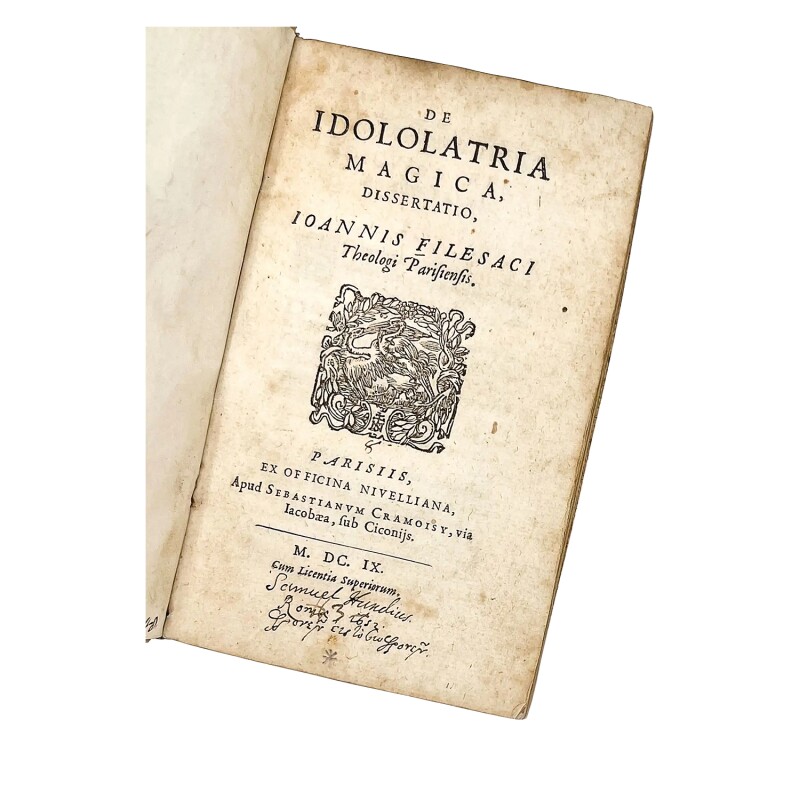
De Idololatria Magica
Officina Nivelliana, apud Sebastianum Cramoisy
1609
Complimentary Shipping
Price:
International shipping available
Customs duties and taxes may apply.
Ships from: Maryland, United States
Taxes not included
VAT and other taxes are not reflected in the listed pricing. Read more
Authenticity guaranteed
We guarantee the authenticity of this item.
Details

Description
First edition of this attack on magic and demonology by a rector of the Sorbonne and influential anti-Jesuit who believed that there were more covens in the world than brothels.
- Jean de Filesac (French).
- Paris: Officina Nivelliana, apud Sebastianum Cramoisy, 1609.
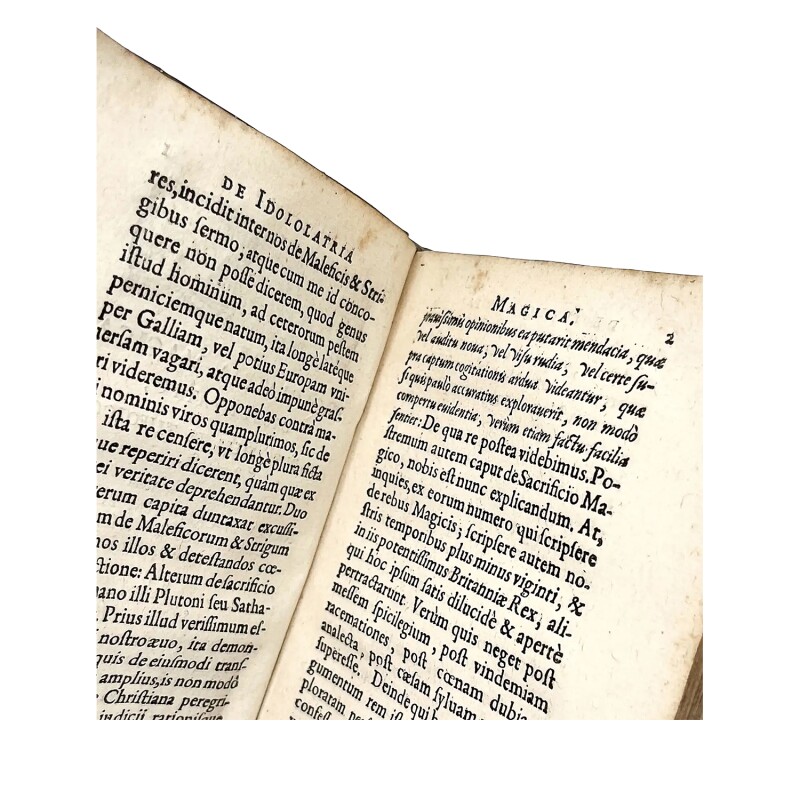
- Text in Latin.
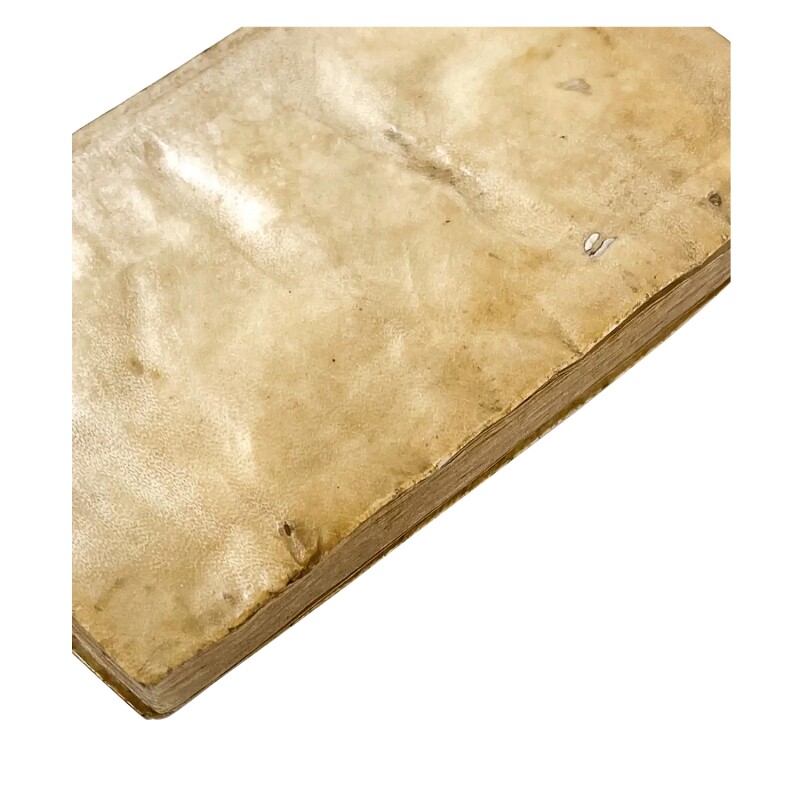
- Contemporary limp vellum.
Filesac, who later became dean of the Sorbonne's Theological Faculty, was a firm believer in "the reality and danger of demons and witches"; he followed Tertullian in arguing that the practice of magic necessarily entails worship of the devil. De Idololatria Magica, his most important work, holds witches to be not only real and in grave theological error, but astonishingly numerous: "Filesac further affirmed that magicians, sorcerers and witches in his time in the Christian world far surpassed in number all the brothels and houses of ill fame" (Thorndike). Filesac marshalled similar arguments in an opinion offered to the court in the lycanthropy case of Jean Grenier — Bordeaux peasant and youngest convicted French werewolf — arguing that disbelief in werewolfism "has often caused impunity for such people and has marvellously multiplied the number of witches who have spread today to all places."
Though Filesac's beliefs "reflect[ed] the extremist superstition of his time" (Lea), his condemnations had wide-ranging impact on such figures as Parisian Paracelsian physician Joseph Duchesne (Mulsow), as well as other philosophical, political, and scientific schools. Additionally, Filesac was notoriously anti-Jesuit. Laursen's Histories of Heresy numbers him among the order's "declared enemies" (157).
Quite rare on the marketplace, with only one auction record in the 21st century. A curious but influential work by a prominent theologian, speaking to how religious arguments and superstitions intertwined inseparably with political and scientific debates in the early modern period.
Condition Report
 Good
GoodContemporary inscription to title page: "Samuel Hundius / Romae 1652 / φρονεῖν εἰς τὸ σωφρονεῖν" (a poet, under the anagrammatic pseudonym Numa Sedulius, and member of the Pegnitz Order of Flowers, a still-active Baroque literary society).
Moderate wear and soil to contemporary vellum, still quite firm.
Light toning and foxing to leaves.
Signs of age and handling.
Product is used.
Language
Subject
Conditions of Business
Please note that the cancellation right for EU/UK purchasers applies to this item. Please read Condition 19 of the Buy Now Marketplace Conditions of Business for buyers for more information. Read more here.