
Private Sale
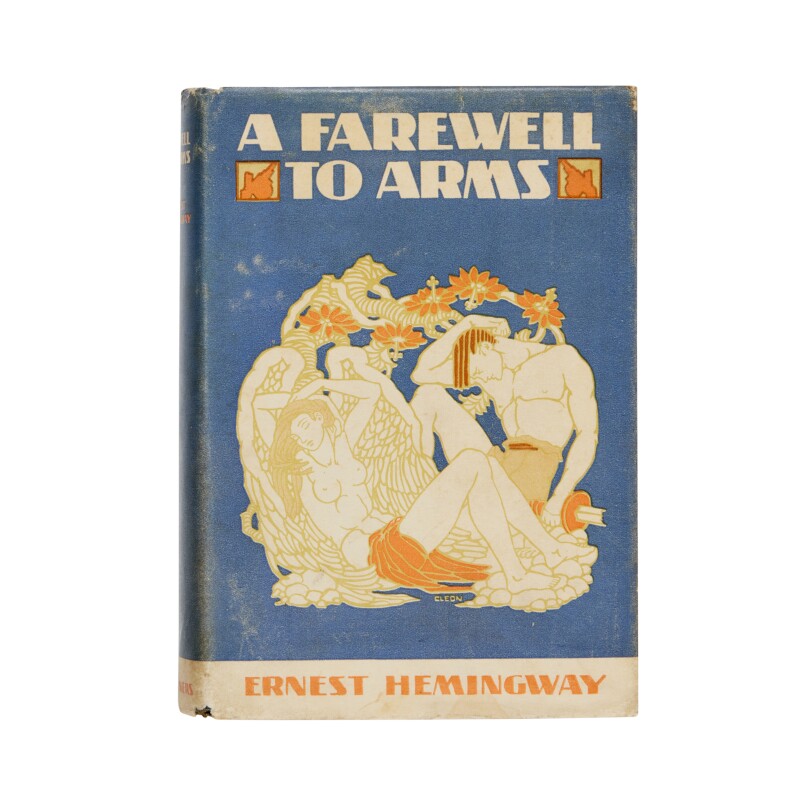
Hemingway, Ernest | A Farewell to Arms in its striking jacket
Price upon request
Taxes not included
VAT and other taxes are not reflected in the listed pricing. Read more
Details

Description
Hemingway, Ernest
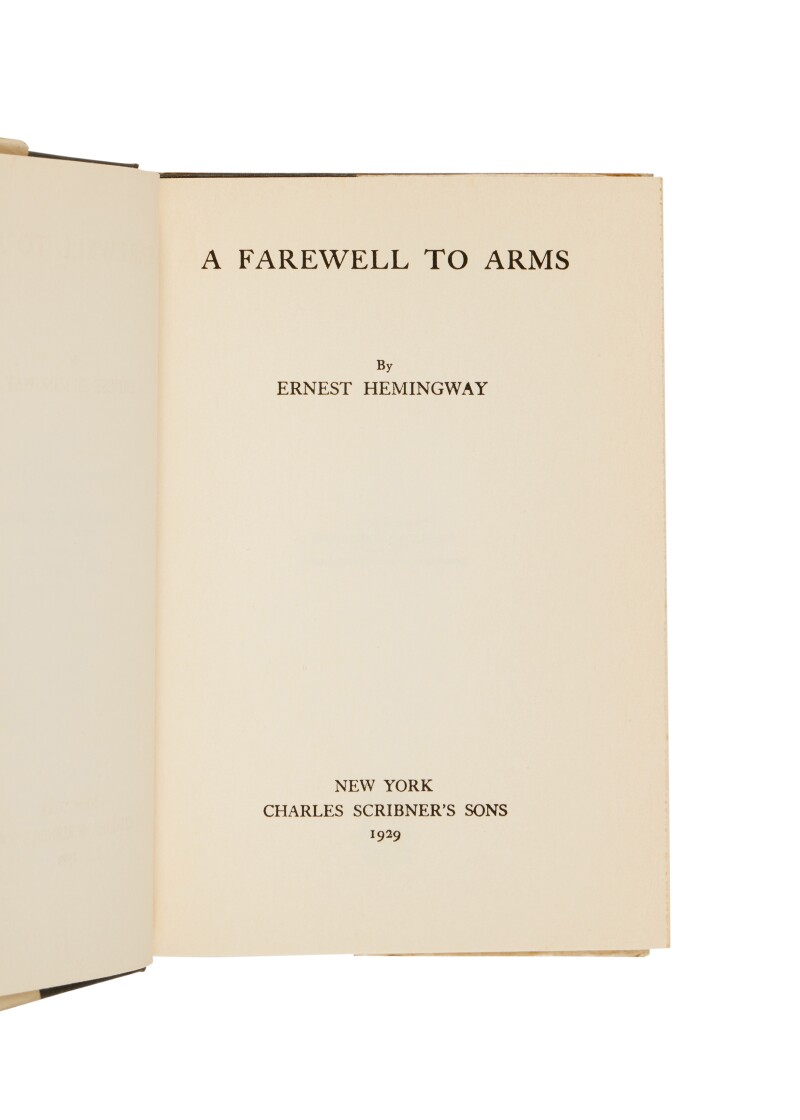
A Farewell to Arms. New York: Charles Scribner's Sons, 1929
8vo. Publisher's black cloth, gold paper title labels to upper board and spine printed in black; minor indentations to upper board, partial browning to endpapers. Dust jacket; a few small chips and light creasing and soiling to the jacket, spine a little toned, "Katherine Barclay" inscription to front flap.
First edition of Hemingway's first best seller.
A Farewell to Arms was published on 27 September 1929 in a first printing of 31,050 copies, after serialization in Scribner's Magazine from May to October. Within four weeks sales climbed to 33,000 copies, and a month later, despite the stock market crash, they soared past 50,000.
A profile of Hemingway by Dorothy Parker in The New Yorker in November marked the point at which the author "passed beyond fame into living legend" (Lynn, Hemingway). "Its success was so enormous that it may be said to have ended Hemingway's influence as a writer. After it one could no more imitate that musical crystal-clear style; blown like glass from the white-heat of violence ..." (Connolly). This was the book that made Hemingway financially independent. Hemingway struggled with the ending; in the 2012 new edition of the work, 47 alternate endings were printed with it.
A Farewell to Arms uses drinking to explore themes of camaraderie and escapism amid the chaos of war. The protagonist Frederic Henry often turns to alcohol as a means of emotional release: "I had drunk much wine and afterward coffee and Strega and I explained, winefully, how we did not do the things we wanted to do; we never did such things."
REFERENCE:
Hanneman A8a; Connolly, The Modern Movement 60; cf. Bernard Oldsey, Hemingway’s Hidden Craft: The Writing of A Farewell to Arms (1979)