George Nakashima
Long Chair
20th Century
Price upon request
Taxes not included
VAT and other taxes are not reflected in the listed pricing. Read more
Details

Description
George Nakashima
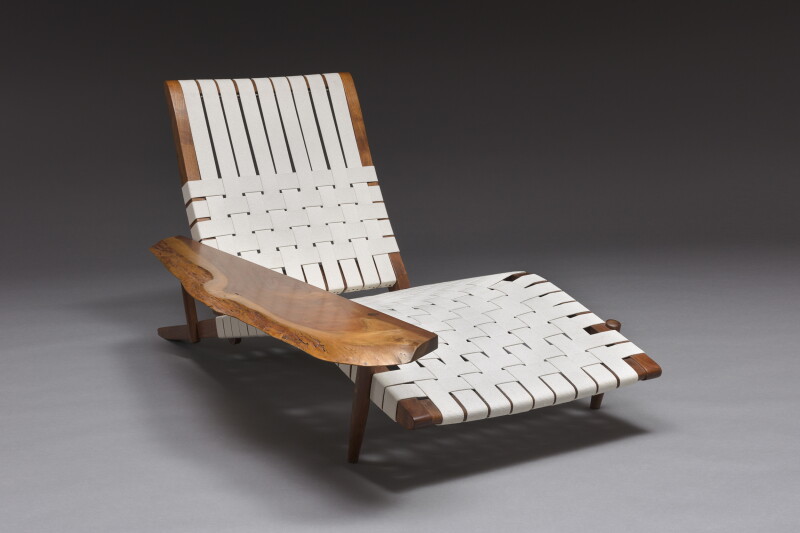
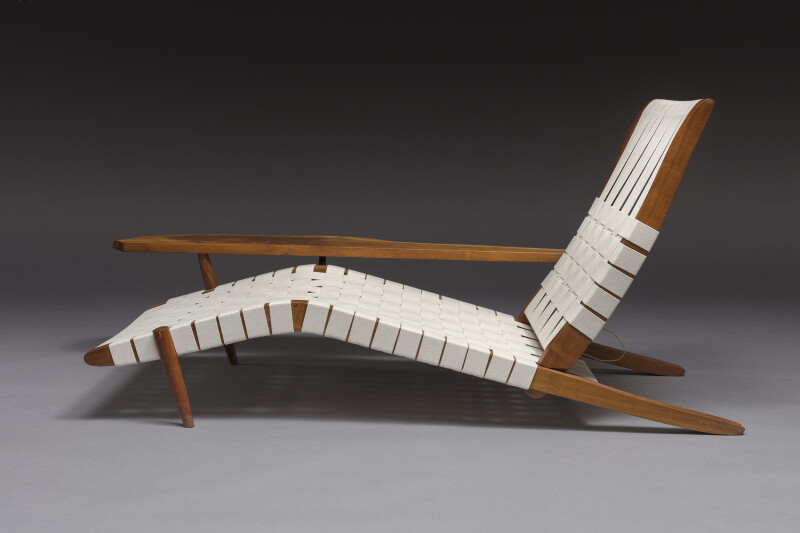
Long Chair
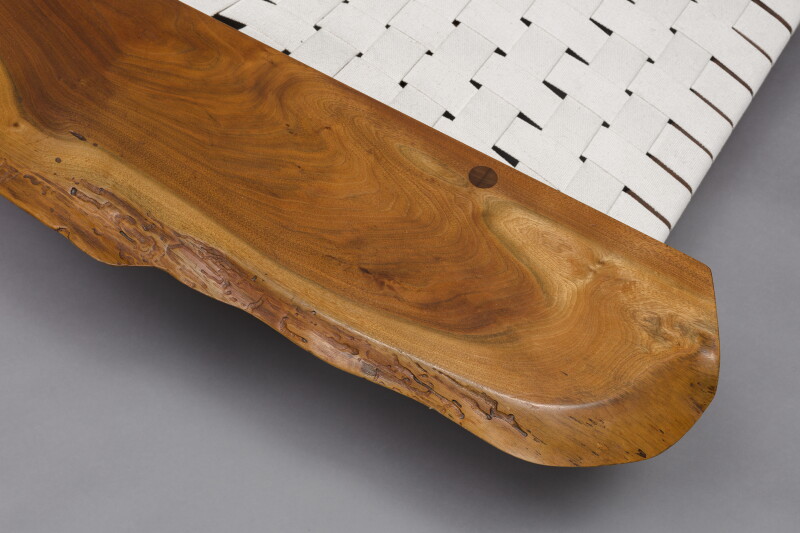
American black walnut and canvas webbing
31 by 65 by 38 in. 78.7 by 165.1 by 96.5 cm
Executed in 1979.
Provenance
Morris Pollak, Washington, D.C. (acquired directly from the artist in 1979)
1950 Gallery, New York (acquired by 2003)
Private Collection, Bucks County, Pennsylvania
Freeman's Philadelphia, June 8, 2021, lot 8
Acquired by the present owner from the above
Literature
Derek E. Ostergard, George Nakashima: Full Circle, New York, 1989, pp. 150-151
Steven Beyer, George Nakashima and the Modernist Moment, exh. cat., James A. Michener Art Museum, Doylestown, PA, 2001, pp. 38-39
Mira Nakashima, Nature, Form, & Spirit: The Life and Legacy of George Nakashima, New York, 2003, pp. 55, 59, 82 (for a drawing of the model) and 89
Catalogue Note
George Nakashima was a twentieth-century furniture designer, architect, and member of the American Craft movement. After earning a degree in Architecture from the University of Washington in 1929, Nakashima pursued graduate studies at Massachusetts Institute of Technology and École Américaine des Beaux Arts, in Fontainebleau, France. In 1934, he moved to Tokyo to work at legendary architect Antonin Raymond’s firm, known for their synthesis of Western engineering practices with Japanese formal design. Nakashima returned to the United States in 1941, where he began his career as a furniture designer. The following year, he and his family were forced into a World War II internment camp in Idaho, where they remained until 1943. Having emerged from this tragedy in triumph, Nakashima opened his own workshop in 1945 in New Hope, Pennsylvania, expanding the property over the rest of his life. A champion of historical methods of craftsmanship, Nakashima celebrated the distinctive qualities of a design achieved by the individual artisan or material used in its production. Wood—a medium he considered to be living—and the unique grain of each tree, were of particular significance to the designer. In 1983, Nakashima published his book, The Soul of a Tree, which explores his oeuvre, life, and aesthetic philosophy.