
- 9
Francisco Zúñiga (1912-1998)
Description
- Francisco Zúñiga
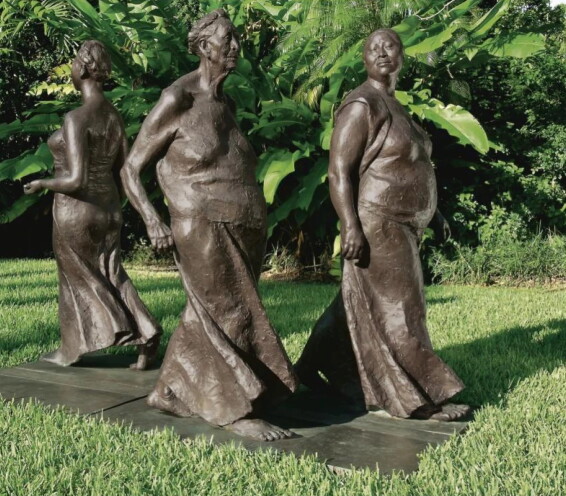
- Tres mujeres caminando
- Edition of IV
- 76 3/8 by 52 by 100 3/4 in.
- (194 by 132 by 256 cm)
- Executed in 1981.
Provenance
Galería Acquavella, Caracas (1987)
Acquired from the above by the present owner
Literature
Francisco Zúñiga: Sculptures/Drawings (exhibition catalogue), Galerie Levy, Hamburg, 1981, pp. 18, 19 and centerfold, illustration of another cast
Jacques Lassaigne and Gabriel Landau, Francisco Zúñiga: Sculpture, Drawings, Lithographs, Brewster Editions, New York, 1982, no. 101, illustrated
Francisco Zúñiga: Three Women Walking (exhibition catalogue), Sindin Galleries, New York, 1983, full catalogue, illustration of another cast
Marcel Paquet, Zúñiga: La Abstracción Sensible, Spain, Ediciones de Equilibrista, S.A. de C.V., 1989, no. 32, p. 84, illustrated
Mexico en el Mundo de las Colecciones de Arte, D.R. Primera Edición, 1994, p. 52, illustration of another cast
Fundación Zúñiga, Francisco Zúñiga: Catálogo Razonado/Catalogue Raisonné (1923-1993), Mexico City, Albedrío/Fundación Zúñiga Laborde, 1999, no. 861, p. 499, illustrated
Catalogue Note
Another cast of this work is in the collection of Wichita State University, Kansas.
Francisco Zúñiga is often thought of as a Mexican artist, such is his affinity to the distinct subject matter and figurative tradition associated with Mexican modern art. Born in 1912 in Costa Rica, Zúñiga moved to Mexico City in 1936 where he lived throughout much of his life. His personal style was undoubtedly influenced by his direct contact with the legends of twentieth-century Mexican art—José Luis Cuevas, José Clemente Orozco, Diego Rivera, and David Alfaro Siqueiros. Zúñiga’s choice of depicting and celebrating Mexico’s indigenous past and present, captured in the physical attributes of its people is on par with the work of Rivera, while his ability to capture the timeless and universal qualities and values of humanity intrinsically links his work to that of Cuevas and Orozco. Zúñiga’s heroic figures possess an almost sacred or otherworldly quality—they are at once venerable in their stances, while simultaneously grounded in their worldly reality. The latter may be the result of the artist’s early exposure to religious statuary working as a teenager in his father’s wood carving studio in Costa Rica.
Zúñiga developed his iconic subject matter and style in the 1960s—inspired by the women of Juchitán, a matriarchal society in the south of Mexico. In Zúñiga’s hands they become the archetypal women and lasting symbols of Latin America’s pre-Colombian past and present. Zúñiga’s women bear witness to the timelessness and power of humanity, and more specifically they acknowledge the sacred role of women in society. Their dignified and defiant postures are universal in their emotive qualities and lasting values.
Three Women Walking depicts a familiar Zúñiga theme—the passage of time and the cycles of life through three figures that represent: the timidity and vitality of youth, the assurance and sensuality of middle-age, and the dignity and peace of old age. All three figures are depicted in motion, the embodiment of self-assurance with the formal equilibrium and grace of professional dancers. The women’s torsos and the large folds of their garments create volume and swaying rhythms while simultaneously endowing these figures with a profound sense of solidity and grace. The monumental and humanistic quality of Zúñiga’s sculptural tour de force recalls such precedents as Auguste Rodin’s Burghers of Calais (1886) and Alberto Giacometti’s City Square (1948). Likewise, one is reminded of the Polish artist Magdalena Abakanowitz’s headless multitudes of sculpted figures and their ability to convey the existential and enduring condition of man. Like these artists, Zúñiga’s skill resides in making the ordinary extraordinary—in elevating the everyday man (or woman) to heroic proportions.
Three Women Walking is a highly ambitious and rare example of Zúñiga’s monumental sculptural groupings, as is Grupo de cuatro mujeres de pie (1974) sold in these rooms in the May 2006 Latin American Art Sale.