
Property of a New York Private Collector
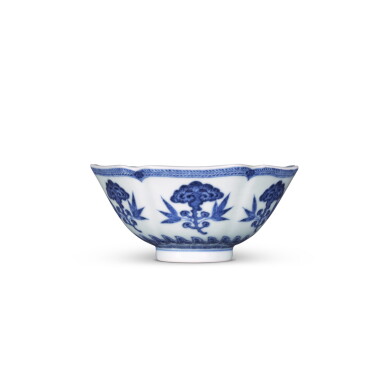
A rare blue and white 'lingzhi' lobed bowl, Seal mark and period of Qianlong | 清乾隆 青花靈芝紋葵口盌 《大清乾隆年製》款
Auction Closed
March 20, 05:40 PM GMT
Estimate
25,000 - 35,000 USD
Lot Details
Description
the base with a six-character seal mark in underglaze blue
Diameter 4⅜ in., 11.2 cm
Christie's Paris, 7th June 2011, lot 299.
來源:
巴黎佳士得2011年6月7日,編號299
Brimming with elegance in both form and design, the present bowl is a fine example of blue and white porcelain of the Qianlong period. The Qing emperors' quest to justify their right to rule China as a foreign dynasty inspired many imperial works of art that incorporated important motifs and subject matters that were already culturally significant and regularly seen on porcelains since before their rule. The lingzhi, painted to the six lobed sides of the bowl and to the interior, already before the Qing dynasty, was considered the most important of all medicines and a talisman for luck. More importantly, it is also associated with the virtues of a ruler; classical texts such as Shangshu Dazhuan, Baihu Tong and Ruiying Tu all consider the growth of lingzhi an indicator of good government. Thus, found repeatedly on Qing imperial wares, it not only represents the emperors' wish for longevity, but more importantly, an inspiration for a virtuous and benevolent rule.
Qianlong mark and period bowls of this type are relatively rare and very few have been sold at auction. See a closely related bowl, sold at Bonhams London, 12th November 2015, lot 129. Due to its endearing size and design, this type continued to be produced during the later reigns: see three Daoguang mark and period bowls in the Palace Museum, Beijing (accession nos 故00161931-1/270, 故00161931-10/270 and 故00161931-2/270), published on the Museum's website.