View full screen - View 1 of Lot 12. The Garden.

Leonard A. Lauder, Collector

Agnes Martin

The Garden

Auction Closed

November 19, 12:41 AM GMT

Estimate

10,000,000 - 15,000,000 USD

Lot Details

Description

Leonard A. Lauder, Collector

Agnes Martin

(1912 - 2004)


The Garden

signed a. martin, titled and dated '64 (on the reverse)

oil and graphite on canvas

72 by 72 in.  182.9 by 182.9 cm.

Executed in 1964.

Robert Elkon Gallery, New York

Samuel Wagstaff, New York (acquired by 1972)

Salvatore Ala, Milan (acquired by 1974)

Robert Elkon Gallery, New York (acquired by 1978)

Estée Lauder Company, New York (acquired from the above in May 1979)

Acquired from the above in November 1995 by the present owner

New York, Robert Elkon Gallery, Agnes Martin, 1965

San Francisco Museum of Art, Art: An Environment for Faith, 1965, n.p., illustrated (detail)

Boston, Institute of Contemporary Art, Multiplicity, 1966, no. 20, n.p., illustrated (detail)

Kassel, Neue Galerie Schöne Aussicht and Kassel, Museum Fridericianum Friedrichsplatz, Documenta 5: Befragung der RealitätBildwelten heute, 1972, p. 43

Milan, Galleria Salvatore Ala, Agnes Martin, 1974

Amsterdam, Stedelijk Museum, Fundamentele schilderkunst/Fundamental Painting, 1975, no. 4, p. 76

New York, Robert Elkon Gallery, Agnes Martin: Drawings of the Sixties, 1978

New York, Robert Elkon Gallery, The Sixties Revisited, 1979

New York, Whitney Museum of American Art; Wisconsin, Milwaukee Art Museum; Miami, Center for the Fine Arts; Houston, Contemporary Arts Museum; Madrid, Museo Nacional Centro de Arte Reina Sofía; Santa Fe, Museum of Fine Arts, Agnes Martin, 1992-94, p. 183 (traveled to all except Madrid and Sante Fe)

Lucy Lippard, "New York Letter," Art International, vol. 6, no. 9, September 1965, p. 60

Lizzie Borden "Cosmologies," Artforum, vol. 11, no. 2, October 1972, p. 49

Corinna Ferrari, "Mostre D'Arte: Agnes Martin, Galleria Ala, Milano, Novembre 1974," Casabella, no. 398, February 1975, p. 14, illustrated

Dinitia Smith, "Art Fever," New York Magazine, 20 April 1987, p. 42, illustrated in color (detail)

Tiffany Bell, ed., Agnes Martin: Catalogue Raisonné: Paintings, New York 2017 - ongoing, no. 1964.012, illustrated in color, online (accessed 13 October 2025)

Executed in 1964, The Garden is a singular painting from the artist Agnes Martin’s early grid series. Unique in its composition of colors and hues, the work presents a delicate array of white, creamy yellow, and pale green rectangles set within a latticework of muted grey. It is among the most intricately conceived examples of the series, which Martin began in 1960, and measures 72 inches or 6 feet square. This format, manageable enough to allow the artist to reach across her canvas and hand-draw her gossamer grid of pencil lines across its breadth and width, is still large enough to project an expansive and sensory optical field: light, space, rhythm, vibrations, and movement gently cascade. “There’s nobody living who couldn’t stand all afternoon in front of a waterfall,” Martin reflected. “It’s a simple experience, you become lighter and lighter in weight, and you wouldn’t want anything else. Anyone who can sit on a stone in a field awhile can see my painting. Nature is like a curtain; you go into it. I want to draw a certain response like this…that quality of response from people when they leave themselves behind, often experienced in nature—an experience of simple joy” (Agnes Martin quoted in: Nancy Princenthal, Agnes Martin: Her Life and Art, New York, 2015, p. 13).


Born in 1912 in rural Saskatchewan, Canada, Martin came to the United States in 1932. By 1947, she was living and painting in the plains of New Mexico. Her first abstract explorations were informed by Cubist geometries and the organic, biomorphic shapes of Surrealism. Upon the advice of the dealer Betty Parson, Martin moved to New York in 1957 and found a studio in Coenties Slip, an artists’ enclave in lower Manhattan. By 1960 she had developed her signature approach to painting: precise painterly marks and a grid format, painstakingly composed of horizontal and vertical pencil lines rendered by hand and a ruler. Martin’s aim in using this reductive scaffolding was not to impose uniformity or rid her art of expression—to the contrary, she wished to draw the viewer into a meditative space, one of equilibrium, innocence (one of her favorite words) and beauty. The grids emerged from Martin’s own internal and concerted development as an artist rather than from any direct outside influence. As Christina Bryan Rosenberger writes, “Martin’s use of the grid was neither predestined, as some have argued, nor the result of her sudden contact with contemporary art in New York. Rather, it was a formal and intellectual solution to Martin’s decades-long quest to create abstract paintings that provoked distinct emotional responses in her viewers” (Christina Bryan Rosenberger, Drawing the Line: The Early Works of Agnes Martin, Oakland, 2016, p. 146).


The majority of Martin’s early 1960s grid paintings bear specific reference to nature imagery in their titles, such as rivers, islands, stones, flowers, the wind—and trees. “When I first made a grid, I happened to be thinking of the innocence of trees. And then, this grid came into my mind, and I thought it represented innocence, and I still do” (Agnes Martin quoted in: Suzan Campbell, “Oral history interview with Agnes Martin, 1989 May 15,” Smithsonian Archives of American Art, 15 May 1989 (audio transcript) (online)). Given the absence of representational imagery in her work, the artist chose titles that illustrated the feelings she aimed to express: of being one with the world (a prolific reader, she was well versed in transcendentalism, Zen Buddhism, and Taoism); the emotion evoked by watching natural processes unfold; and the experiencing of the vastness of the physical world. In the words of Lawrence Alloway, “Martin uses images that evoke an iconography of wholes and totals, whose natural analogue is landscape as it expands into amplitude and infinite spaces” (Exh. Cat., Philadelphia, Institute of Contemporary Art, Agnes Martin, 1973, p. 10). The Garden is one of four works by the same name: the other three include an early wood assemblage in the Des Moines Art Center’s Louise Noun Collection of Art by Women and two paintings in the Hirshhorn Museum and Sculpture Garden, Smithsonian Institution, and the Kunsthalle Weishaupt respectively.


This work’s colors distinguish it from the previous year’s grid paintings, which were rendered in deep blue and sometimes gold, as well as subsequent works in monochromatic schemes of black, grey, white, and brown. It is the green of The Garden, placed in repetition with the other neatly painted tesserae of yellow and white, that suggests infinite rows of garden plots next to yellow blooms and sky, even if Martin’s goal was never so literal. Instead, she wished for the eye and mind to experience a different space—one of pure lyrical abstraction. To this end, the artist plotted out her marks, beginning with a border around the canvas edge. She then divided the surface internally into rectangles, with twenty-three running vertically and twenty-seven horizontally; each component of this grid, in turn, appears with the same rhythmic array of tiny green, yellow, and white bands. “When I cover the square surface with rectangles, it lightens the weight of the square, destroys its power” (Agnes Martin quoted in: Lucy R. Lippard, “Homage to the Square,” Art in America, July–August 1967, p. 55). Martin typically primed the canvas in one or two thin layers, leaving visible the weft and warp. The lines comprising both the grid and the outlines of the rectangular colors are rendered imperfectly; at times the pencil skips, leaving only shiny graphite dots on the canvas instead of a complete line, a testament to fallibility—and persistence.


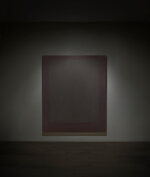
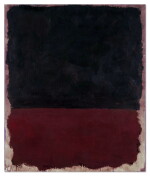
Although she is often categorized as a Minimalist, Martin instead believed her work to be more conceptually akin to the Abstract Expressionists, the group with which she most identified (she was particularly close to Ad Reinhardt). “I consider myself an Abstract Expressionist,” she stated in a 1989 interview, “The truth was that [the Minimalists] were non-subjectivists. That they wanted to not make any personal decisions in their work…[they] wanted it to be impersonal” (Agnes Martin quoted in: Suzan Campbell, “Oral history interview with Agnes Martin, 1989 May 15,” Smithsonian Archives of American Art, 15 May 1989 (audio transcript) (online)). As with The Garden, the imperfections and hand painting reveals an individual humanity, not anonymous standardization. Like Rothko’s paintings (see fig. 5), The Garden invites immersion and transcendence.


The work bears exceptional provenance, having been held in the private collection of Martin’s friend and early patron, the visionary curator Samuel Wagstaff. It was Wagstaff who had arranged for a group of Martin’s grid paintings—including The Garden—to be included in Harald Szeemann’s milestone exhibition for Documenta 5 in 1972; at this point the artist had temporarily abandoned painting and left New York for the solitude of Taos. The Documenta showing led to a renewed interest in Martin’s work. Reviewing the exhibition in Artforum that year, Lizzie Borden observed: “the three Martins, River, 1964, Garden, 1964, and Tundra, 1967, are all late grid paintings in which slight variations of line create a modulation of the surface, the tremor of the hand-drawn line working against the precision of the module” (Lizzie Borden “Cosmologies,” Artforum, October 1972, p. 49). Selected for inclusion in a number of significant early exhibitions, The Garden returns to public view for the first time since its pivotal inclusion in the landmark 1992–94 Agnes Martin, organized by the Whitney Museum of American Art in the Breuer building.