
The Shapes of Cartier
Cartier, Paris
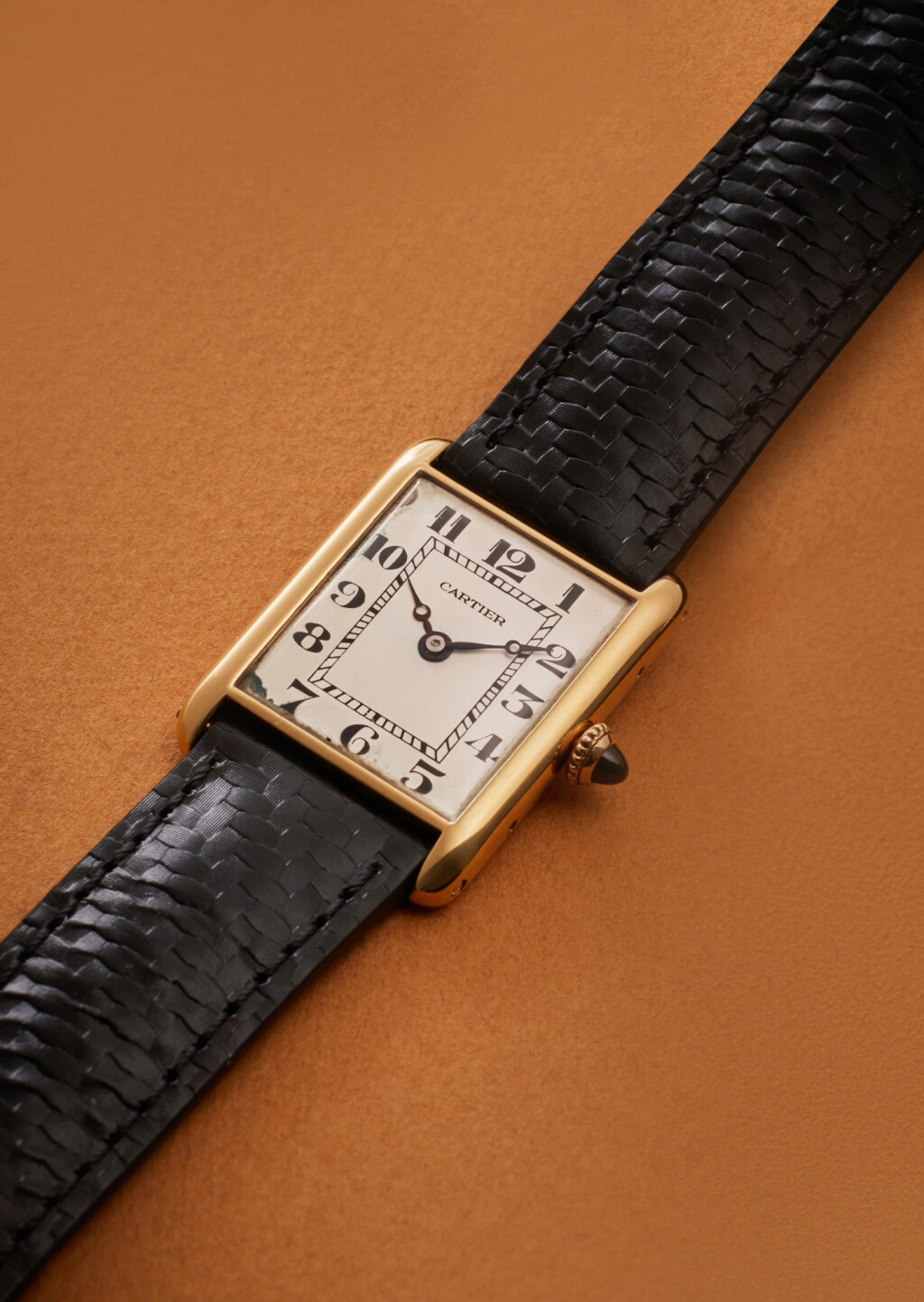
Tank L.C. | London retailed: A yellow gold rectangular wristwatch with yellow and pink gold deployant buckle, Circa 1927
Auction Closed
June 15, 08:08 PM GMT
Estimate
20,000 - 30,000 USD
Lot Details
Description
Dial: silvered dial signed Cartier, black Arabic numerals, inner chemin-de-fer minute track, blued steel Breguet hands
Caliber: 9¼’’’ LeCoultre circular movement signed European Watch and Clock Co. Inc., damascened Côtes de Genève decoration, lever escapement, 18 jewels, bi-metallic compensation balance with timing and poising screws, 8 adjustments, flat hairspring
Movement number: numbered to movement beneath dial 27'139
Case: 18k yellow gold, rectangular with polished finish, rounded brancards, beaded cabochon sapphire-set crown, case secured by four screws to case sides, gold screw-set lug bars, gold case back with vertical satin finish, inside case back signed European Watch and Clock Co. Inc. France and hand stamped 2'012, French eagle’s head assay mark
Case number: hand stamped numbering 19'236, • 2'012 •, 27'139, bezel interior numbered 19'236
Closure: 18k yellow and pink gold deployant buckle with French Socrates head assay mark in hexagonal cartouche
Size: 30 x 23 mm
Accessories: Cartier presentation box
The Tank L.C. (named after Louis Cartier) was first released in 1922. Originally named “Tank à Bords Arrondis” (Tank with Rounded Edges), it was renamed the L.C. in 1924.
The model has rounded case sides and an oblong dial that lend the L.C. a decidedly more rectangular feel than the Tank Normale. The L.C. dispenses with the flat upper section of the brancards and the broad flat crossbars that form the bezel surrounding the Tank Normale’s dial. This lends the L.C. Tank a softer, less angular appearance; slim crossbars between its two case sides largely dissolve the bezel, ensuring maximum area is given to the dial.
The L.C. design would later come to dominate the Cartier Tank lineup. Tank watches from this era are very rarely found with anything other than Roman numerals to their dials, the stylised Arabic numerals found on this watch are, however, very representative of the slightly italicised form of numeral that was favoured by other makers during the Art Deco period.