
The Collection of Phyllis & Jerome Lyle Rappaport
Lars Fisk
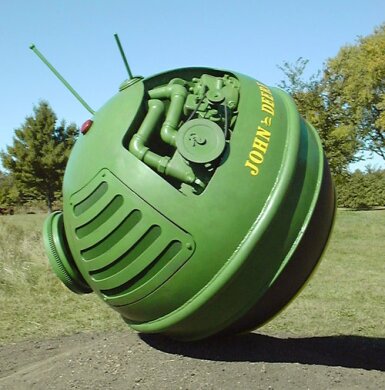
John Deere Ball
Lot Closed
October 3, 06:10 PM GMT
Estimate
20,000 - 30,000 USD
Lot Details
Description
The Collection of Phyllis & Jerome Lyle Rappaport
Lars Fisk
b. 1970
John Deere Ball
steel, cast iron and modified tractor parts
approx: 54 by 60 in.
137.2 by 137.2 cm.
Executed in 2000.
Acquired directly from the artist by the present owner
Jerry and Phyllis shared a deep commitment to philanthropy, a passion that continues to thrive within Phyllis today. Their joint efforts in building the collection were driven by their love for art and fueled by their active engagement in social and public policy matters in Boston. In 1997, Phyllis and Jerry founded the Rappaport Foundation, dedicated to promoting emerging leaders in public policy, science, and the arts and in 2000, they established the Rappaport Prize, which fosters the careers of emerging contemporary artists who enriched the New England community. Recipients of the prize have included artistic luminaries such as Lars Fisk (2002), Barkley Hendricks (2017), Titus Kaphar (2018) and Katherine Bradford (2021), among many others.
In 2002, Lars Fisk was awarded the Rappaport Prize for his playful and creative series of spherical sculptures. In this body of work, Fisk distills ordinary objects or subjects connected to a sense of place into the basic form of spheres in order to test the viewer's perspective and “find how we might recognize something by seeing it for what it is not." The Rappaport Prize allowed Fisk the freedom to attend a highly competitive residency program at the Skowhegan School of Painting & Sculpture, which reinvigorated his artistic practice and prompted him to continue his artistic education by earning a Master's Degree in Fine Arts.
Reflecting on the impact of winning the Rappaport Art Prize in 2002, Lars Fisk stated, “I am tremendously appreciative of foundations such as the Rappaport's for making these sorts of grants available. It is not just the financial support that is so critical to the sustainability of an artist's practice but also the demonstration of belief in an artist's endeavors that provides them with a source of moral support that is beyond value.”