Ferdinando Palla
The Three Graces
Lot Closed
July 2, 03:28 PM GMT
Estimate
40,000 - 60,000 GBP
Lot Details
Description
Ferdinando Palla
Italian
1852-1944
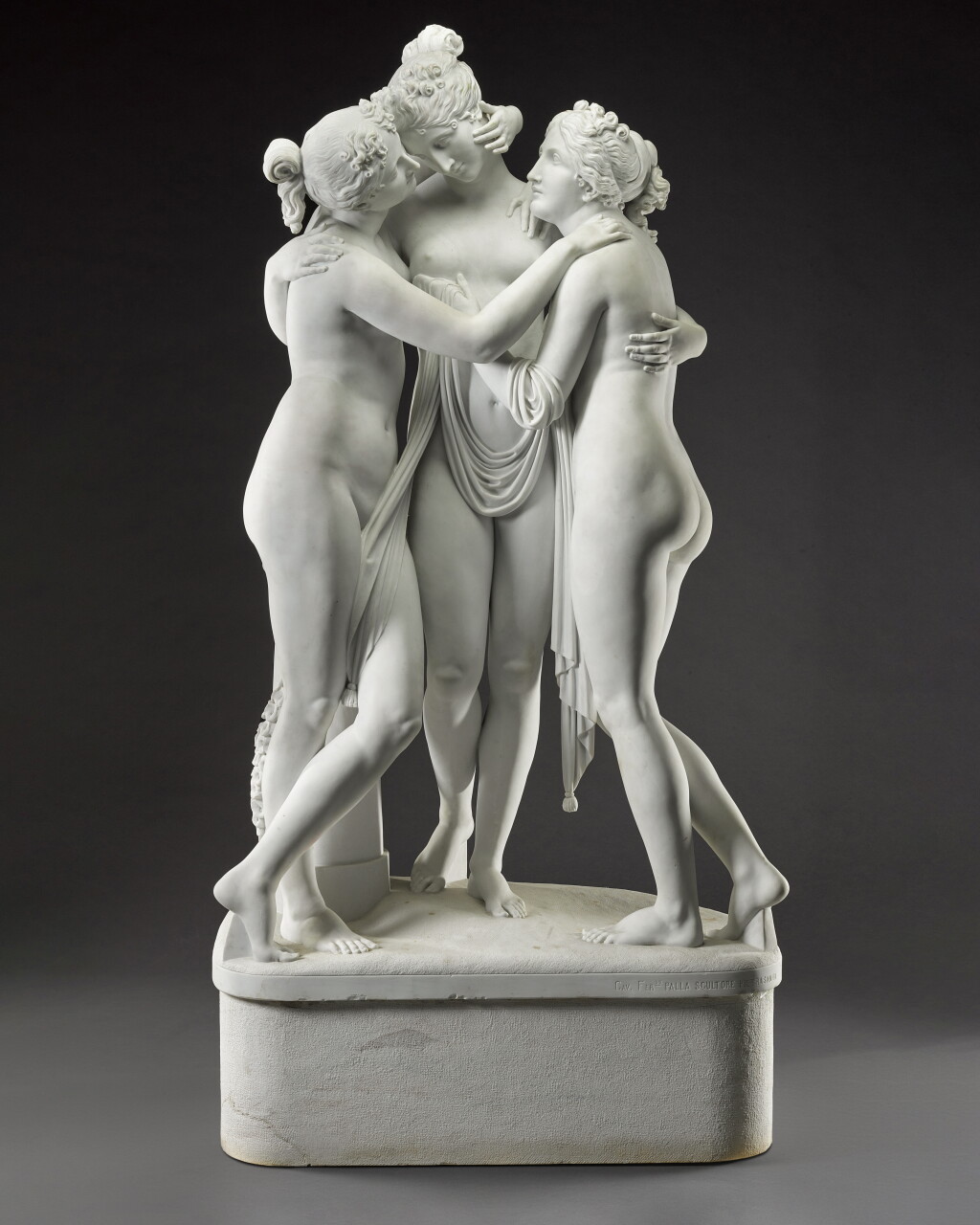
The Three Graces
signed: CAV. FERDO PALLA SCULTORE PIETRASANTA
white marble
three graces: 172cm., 67 3/4 in.
base: 30.5cm., 12in.
Little biographical information is known of Ferdinando Palla. He was active circa 1925 in Tuscany, where he was commissioned a memorial monument for the Caldana War in Grosetto. The following year, he worked on a monument of Saint Francis in Ostuni. He also carved the monumental marble Madonna for the altar of the church of San Tommaso in Cuneo. This beautifully carved marble depicts the Three Graces, after Antonio Canova's model in the Hermitage Museum in St. Petersburg and in the Victoria & Albert Museum in London (inv. no. A.4-1994). Several Italian artists active in the 19th and 20th centuries copied Canova's masterpiece, including Antonio Frilli (1860-1902), by whom a marble version was sold at Sotheby's New York, 27 January 2022 (107,100 USD).
Canova’s masterpiece was commissioned in 1812 by the Empress Joséphine de Beauharnais, the first wife of Napoleon Bonaparte. While depictions of this subject can be traced back to antiquity, exemplified by the famous Roman group, Les Trois Grâces, that was restored by Nicolas Cordier (1567-1612) and is in the collection of the Musée du Louvre, Canova’s composition has become so famous that it is now synonymous with the subject.
Canova’s sculpture depicts the three young daughters of Zeus, the king of the Greek Gods. Each daughter personifies a sacred gift to humanity. From left to right, Euphrosyne represents mirth, Aglaia personifies elegance, and Thalia, youth and beauty. The three women face the viewer and gracefully and affectionately embrace each other. The central figure wraps her arms around her sisters, and all three figures are further united by a sinuous piece of cloth, which is entwined with their limbs. Behind the women stands an altar adorned with a garland of flowers, representing both the ties between them and the ancient Greek religion from which their legend is derived.
RELATED LITERATURE
A. Panzetta, Nuovo Dizionario degli Scultori Italiani dell'Ottocento e del primo Novecento, Turin, 2003, p.676; S. Grandesso, F. Mazzocca (eds.), Canova, Thorvaldsen, La nascita della scultura moderna, Milan, 2020, p. 210
You May Also Like