
Property from a Swiss Private Collection
German, 16th century
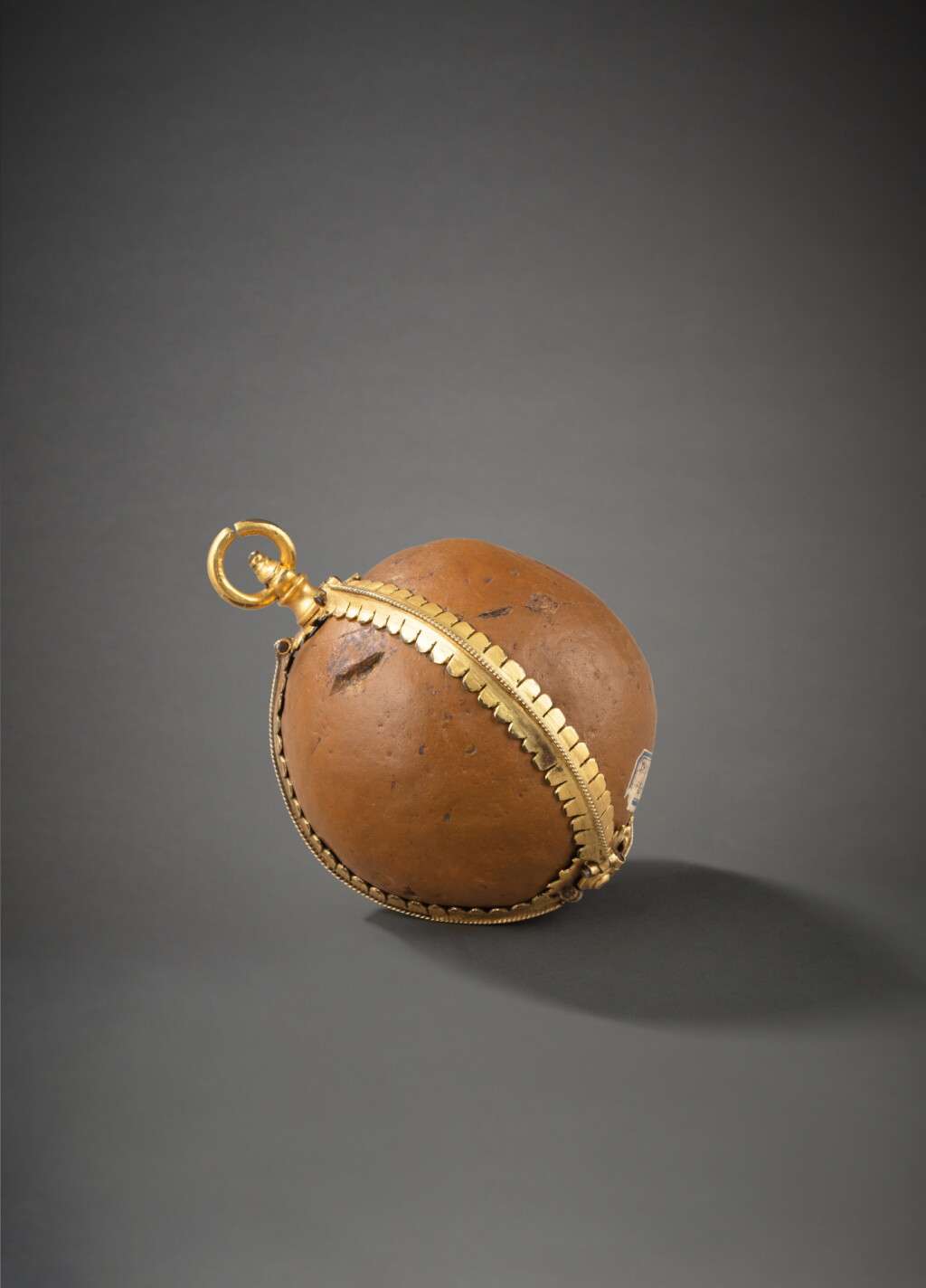
Bezoar Stone
Auction Closed
February 2, 05:19 PM GMT
Estimate
12,000 - 18,000 USD
Lot Details
Description
Property from a Swiss Private Collection
German, 16th century
Bezoar Stone
copper, bezoar
diameter: 3 ⅞ in.; 9.5 cm.
with copper mounts and an old collection label on bottom
Private Collection.
Called pearls of the stomach, bezoar stones are comprised of partially digested material from certain animals, such as goats, deer and antelope. In the 8th century, Arab and Persian doctors began using them as a cure for various maladies, either as talismans or directing their patients to ingest a portion of the stone.
In the 15th century, European medicine embraced their status as a panacea and they were added to the Kunstkammer collections of aristocrats, including those of the Dukes of Alba and Berry, and the Habsburgs. These stones were often elaborately decorated with precious metals and accompanied by bespoke cases, which were all believed to enhance their mysticism. As size was thought to directly correlate to its power, the present bezoar stone would have been highly coveted. The intricate gold mounts suggest that it was prized by its owner and the various surface abrasions could be indicative to its frequent use as a healing tool.
Although few bezoar stones have survived to the present day, there exists other examples in the Metropolitan Museum of Art, New York (accession number: 1980.228.1, .2a, b, .3) and the Kunsthistorisches Museum, Berlin (accession number: Kunstkammer, 981).