
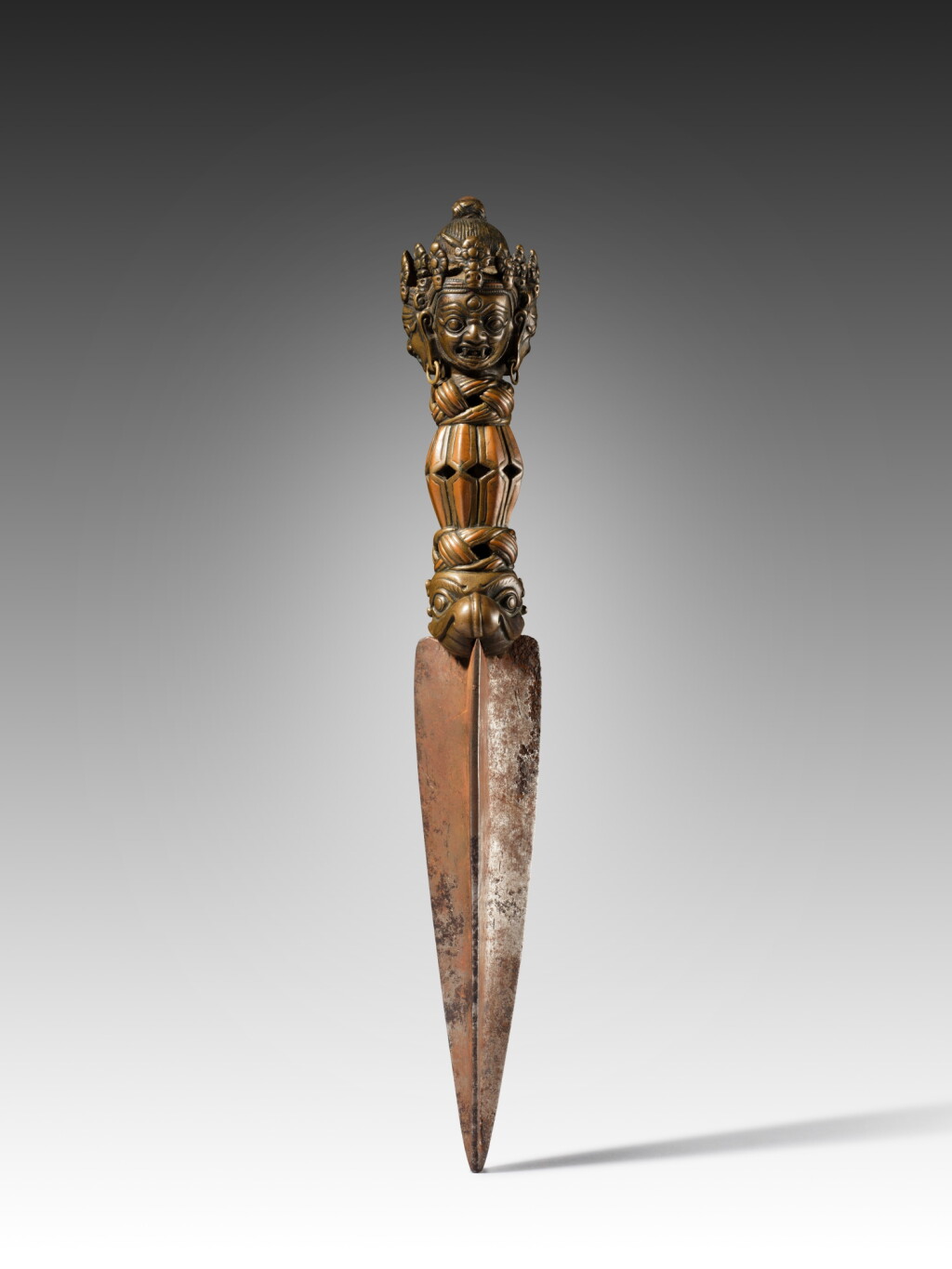
A copper-inlaid copper-alloy and iron ritual dagger, Tibet, 14th century
Auction Closed
September 18, 04:57 PM GMT
Estimate
50,000 - 70,000 USD
Lot Details
Description
A copper-inlaid copper-alloy and iron dagger (Phurba),
Tibet, 14th century
Himalayan Art Resources item no. 13913.
HAR編號13913
Length 11⅝ in., 29.5 cm.
Litang Trading Co., Hong Kong, 2003.
Kila (Tbt. purba), literally a nail or stake, is the ultimate weapon against the enemies of Dharma, the Universal Buddhist Law. The origin of the ritual implement lies at the heart of Indian Vedic tradition with the demise of the primordial cosmic serpent Vritra and the resulting flow of life-giving waters. The weapon of destruction, and consequent creation, was the central shaft, kila, of Indra’s vajra thunderbolt, stretching down to earth from the realm of the gods. In Tibetan Buddhist ritual the kila is used to trap and destroy demons of the mind, the obstructions on the path to enlightenment. The mystical power of the implement, embodied in the fierce heads and grip, is invoked to subdue negativity and malicious influences that are trapped and destroyed by the blade. A kila is wielded by an adept in an individual act of exorcism, while a set of ten kila are employed during ceremony to prepare hallowed ground, such as for the construction of a mandala or a monastery foundation.
For another Tibetan phurba from a set, see Jane Casey, Naman P. Ahuja, and David Weldon, Divine Presence: Arts of India and the Himalayas, Barcelona, 2003, p. 160, pl. 54. The implement has myriad conceptual and physical forms that represent the power of Tibetan tantric deities including Vajrakila, Hyagriva and Achala.