Property from the Pijnenburg Collection, Netherlands
Otto Piene
Head and Halo
Lot Closed
December 10, 01:52 PM GMT
Estimate
12,000 - 18,000 EUR
We may charge or debit your saved payment method subject to the terms set out in our Conditions of Business for Buyers.
Read more.Lot Details
Description
Property from the Pijnenburg Collection, Netherlands
Otto Piene
1928 - 2014
Head and Halo
signed, titled and dated 74 (lower left)
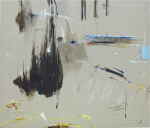
gouache and traces of fire on cardboard
96 by 67.5 cm.
37¾ by 26⅝ in.
Executed in 1974.
Mayor Gallery, London (acquired directly from the artist)
Acquired from the above in 2013 by the present owner
- A large-scale work from 1975, showcasing the artist’s mature exploration of light and texture.
- Executed using Piene’s pioneering ‘Fire Painting’ technique, where soot and flame shape the composition.
- Otto Piene was a foundational member of the influential ZERO group.
Head and Halo is a compelling mixed-media work that radiates energy through the controlled deployment of elemental forces. The composition is structured by a dominant central form, accented by broad applications of gouache, surrounded by delicate, cloud-like patterns of black soot and scorched residue. These unique textures are the direct result of Piene’s singular technique, where he passed fire over the prepared surface to allow the flame's interaction with the medium to physically determine the surface quality. The resulting image evokes a luminous, ethereal head crowned by a concentric 'halo' of light and shadow.
This work is an example of the artist's known style and technique, firmly establishing Head and Halo within the framework of the ZERO group, which Piene co-founded. The Fire Painting technique, executed here on cardboard, was Piene’s radical contribution to the ZERO movement’s quest for a new, light-based art that moved beyond traditional painting. By utilizing fire, smoke, and light as primary tools—what he termed 'Farbqualitäten' (color qualities), Piene sought to create works that emphasized movement, process, and elemental force. Executed in 1975, this piece demonstrates the mature and poetic application of these principles.
Otto Piene's institutional relevance is anchored by his central role in Post-War European avant-garde movements. His work, often exploring technological innovation, has been the subject of major international retrospectives. These include the significant ZERO exhibition, ZERO: Countdown to Tomorrow, 1950s–60s, which traveled to institutions like the Solomon R. Guggenheim Museum, New York (2014).
You May Also Like