
Formerly the Property of Phyllis Frank, neé Francatelli
Cartier
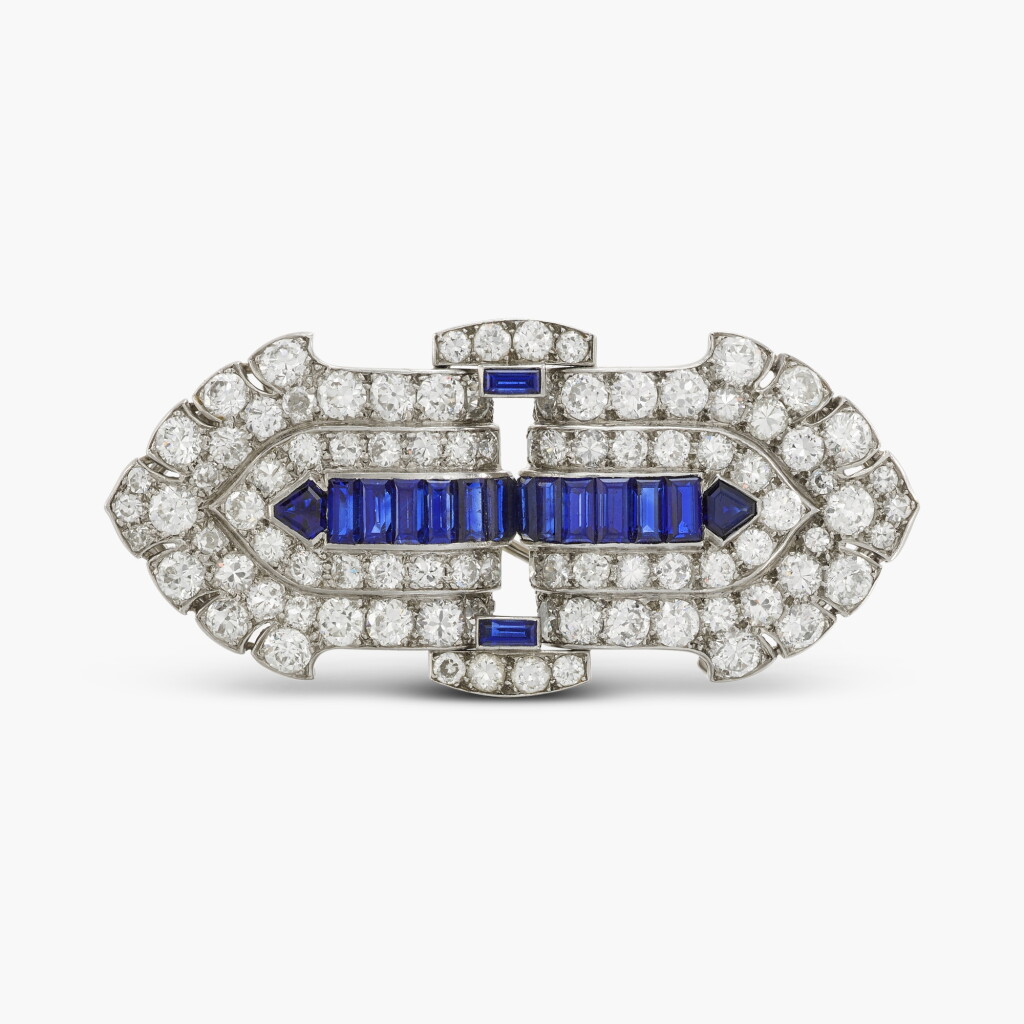
Sapphire and Diamond Double Clip Brooch
Lot Closed
June 3, 01:42 PM GMT
Estimate
10,000 - 15,000 GBP
We may charge or debit your saved payment method subject to the terms set out in our Conditions of Business for Buyers.
Read more.Lot Details
Description
Each palmette motif of tiered design, composed of the calibré-cut sapphires and old brilliant and brilliant-cut diamonds.
- Measuring approximately 60 x 38mm
- Each clip signed Cartier London
- Circa 1935
- Gross weight approximately 30.0 grams
Phyllis Frank, neé Francatelli
Descent to the current owner
Judy Rudoe, Cartier 1900 – 1939, 2000, pg. 312 for design drawing of similar palmette design detail
Harry Fane, Hans Nadelhoffer et al. Reflections of Elegance, Cartier Jewels from the Lindemann Collection, 1988, pg. 58 for a similar palmette motif
Musée du Petit-Palais Exhibition Catalogue, L’Art de Cartier, 2000, pp. 126, 138, 146, for similar diamond-set palmette motif
Lots 41 to 47 form a private collection of jewels given to Phyllis Frank (neé Francatelli), b.1892- d.1972, by her New York financier husband, Jesse Frank, during the 1920s and 1930s.
The collection exemplifies the geometry and design synonymous with Cartier during this seminal point in the firm’s history. The jewels set with diamonds, sapphires, and lapis lazuli, reflect the innovation and creativity for which Cartier was renowned during the Art Deco movement.
Phyllis Frank was one of the original models for Lucile Ltd - Lady Duff Gordon’s fashion line - arguably the first global couture brand with salons across three countries. Duff Gordon is considered the first designer to utilise the catwalk, training her models, including Francatelli, to pose and walk in ‘mannequin parades’, a precursor to the modern-day fashion show.
The evocative photographs of the Lucile campaigns from 1915 to 1920 demonstrate Francatelli’s natural ease, elegance and wit in front of the camera. Lady Duff Gordon focused her designs on the individual character of each model, encouraging each woman to wear the clothes in a way that reflected how they carried and saw themselves, rather than separating the clothes and the design from the women who wore them, as personified by the shots of Francatelli from this period.
Frank’s collection of jewellery reflects the change in women’s fashion from Lucile Ltd’s feminine designs, to the androgynous dress of the 1920s, enhanced by flatter, geometric jewellery. The evolution of fashion, across dress and adornment, reflected the newfound freedom women experienced in the post war world, something that Lucile's ‘mannequins’, such as Phyllis Francatelli, were at the forefront of.
Please note the image has been provided by and is under copyright of the Victoria and Albert Museum.