Property from a Collection formed by Dr Hinrich Bischoff
Jan Lievens
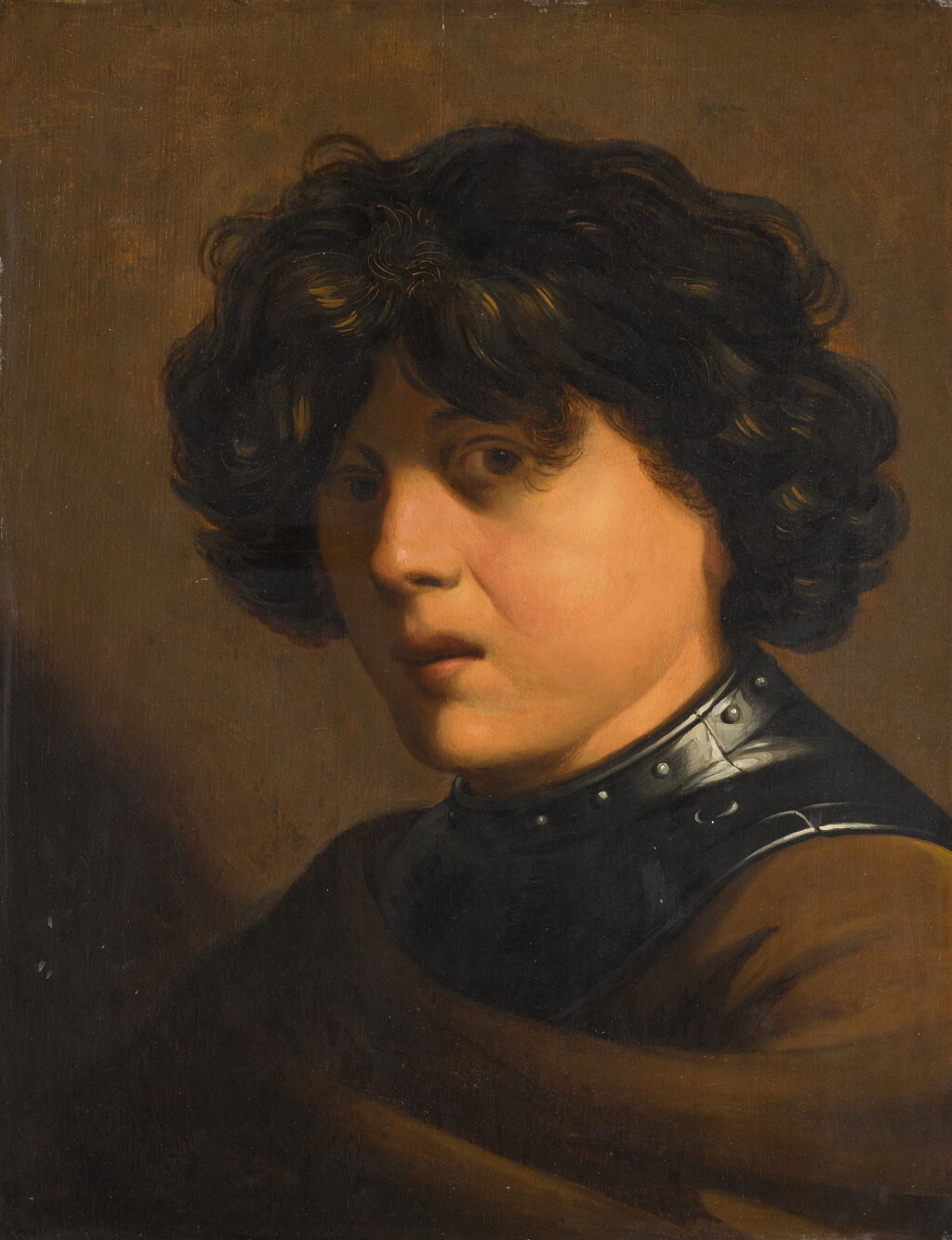
Portrait of a boy, head and shoulders, wearing a gorget
Auction Closed
July 6, 10:53 AM GMT
Estimate
60,000 - 80,000 GBP
Lot Details
Description
Property from a Collection formed by Dr Hinrich Bischoff
Jan Lievens
Leiden 1607–1674 Amsterdam
Portrait of a boy, head and shoulders, wearing a gorget
oil on oak panel
unframed: 50.3 x 38.9 cm.; 19¾ x 15¼ in.
framed: 85.6 x 74.4 cm.; 33¾ x 29¼ in.
Felix Holzapfel, London;
With Galerie Edel, Cologne, from whom purchased Dr Hinrich Bischoff in the late 1980s;
Thence by descent.
Cologne, Wallraf-Richartz-Museum, on loan by 1993 until before 2016 (inv. no. Dep. 517).
W. Sumowski, Gemälde der Rembrandt Schüler, Landau and Pfalz 1983, vol. 5, p. 3109, no. 2124, reproduced in colour p. 3269 (as Jan Lievens, circa 1626–27);
B. S[chaefer], in E. Mai (ed.), Das Kabinett des Sammlers, Cologne 1983, pp. 161–62, no. 64, reproduced in colour p. 163 (as Jan Lievens);
H. Gutbrod, 'Lievens und Rembrandt. Studien zum Verhaeltnis ihrer Kunst', in Ars Fasciendi, 6, Frankfurt 1996, p. 187 (as not by Lievens);
L. DeWitt, Evolution and Ambition in the Career of Jan Lievens, 1607–1674, PhD dissertation, University of Maryland, College Park, 2006, pp. 71–72, reproduced fig. 29 (as Jan Lievens, a self-portrait, circa 1626–27);
F. Gottwald, Das Tronie-Muster, Studie und Meisterwerk. die Genese einer Gattung der Malerei vom 15. Jahrhunderts bis zu Rembrandt, Munich 2011, pp. 100–3, reproduced fig. 57 (as Pieter de Grebber, circa 1628);
B. Schnackenburg, Jan Lievens, Petersberg 2016, p. 469, no. R 5, reproduced fig. 142 (as Pieter de Grebber).
This strongly-lit picture is an early work by Jan Lievens, painted in the mid-1620s, when he must have been exposed to the first generation of Dutch Caravaggisti who were starting to return to the North from Rome. Over the last decade and a half, several early works by Jan Lievens have come to light, and his early œuvre, and the dating of it, has been reassessed. The exhibition devoted to him in 2009 under a team of distinguished scholars led by Arthur Wheelock was subtitled with good reason A Dutch Master Rediscovered, and cast much fresh light on various aspects of Lievens’ career, not least of which his work at its outset, in the mid-1620s.1
Werner Sumowski, who first published this work, had earlier thought it to be by Rembrandt’s pupil Jacob Backer, but rightly compared it with the cycle of the Evangelists in Bamberg, which is generally dated circa 1626–27.2 The broad handling of the St John in particular is reminiscent of the present work, but much more striking is the likeness of the model. Sumowski suggested that the St John might be a self-portrait, although in fact the suggestion had already been made by Helga Gutbrod in 1996, as Arthur Wheelock noted in his catalogue entry.3 Yet closer to the present work in style and handling is the strongly Caravaggesque and dramatically lit Saint Peter Released from Prison, which came to light at Sotheby’s in London in July 2000, and which, restored, was included in the 2009 exhibition.4 The physiognomy of the Angel strongly resembles the present youth, and must have been based on the same model, perhaps also Lievens himself. The Saint Peter Released from Prison is likely to be even earlier in date, circa 1624–5, and the present work too is likely to date from no later than 1626.
We are grateful to Lloyd DeWitt for endorsing the attribution to Lievens, based on first-hand inspection. Franziska Gutbrod proposed an attribution for the present work to Pieter de Grebber, datable circa 1628, an idea that was taken up by Schnackenburg.
1 K. Wheelock Jr. (ed.), Jan Lievens. A Dutch Master Rediscovered, exh. cat., New Haven and London 2009.
2 See under Literature.
3 Gutbrod 1996, p. 190 ; see Wheelock under Literature, p. 99, reproduced p. 101.
4 See Wheelock under Literature, p. 90, no. 5, reproduced p. 91.
You May Also Like


