Jean-Baptiste Lallemand
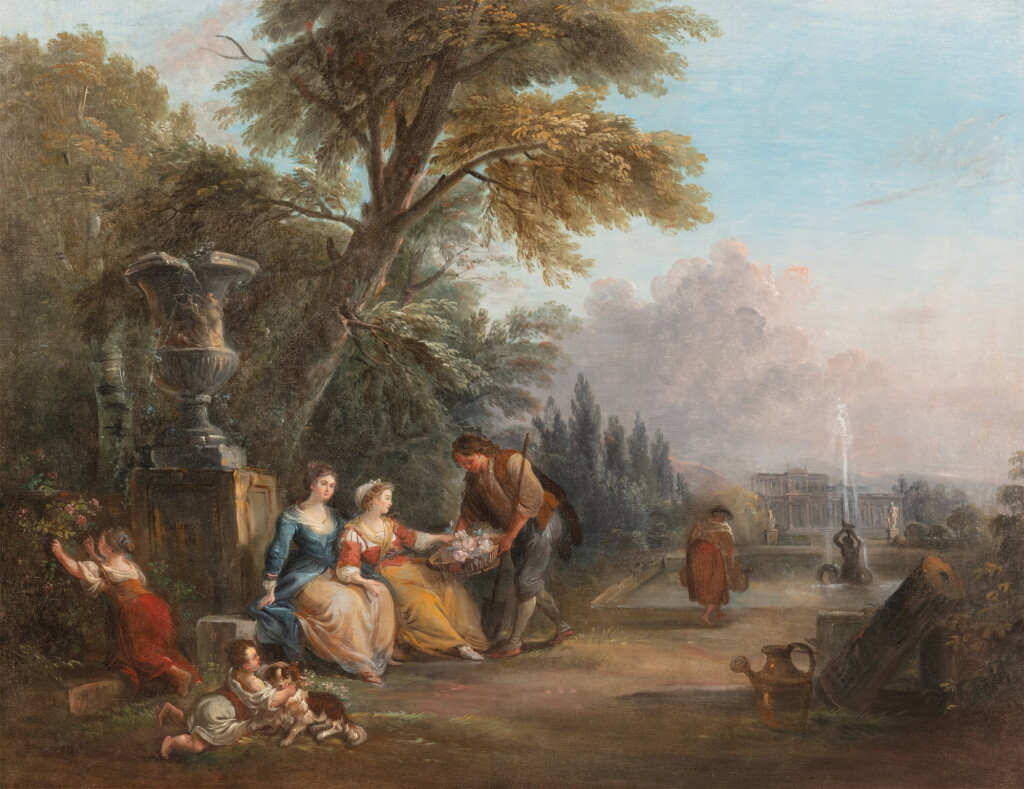
A pastoral scene with a castle | Pastorale et ruines
Lot Closed
November 14, 03:37 PM GMT
Estimate
15,000 - 26,000 EUR
Lot Details
Description
Jean-Baptiste Lallemand
Dijon 1716 - 1803 Paris
A pastoral scene with a castle
Oil on canvas
Signed lower left on the pedestal Lallemand / [...]
106,5 x 138,3 cm ; 41⅞ by 54½ in.
____________________________________________
Jean-Baptiste Lallemand
Dijon 1716 - 1803 Paris
Pastorale avec un château
Huile sur toile
Signé en bas à gauche sur le piédestal Lallemand / [...]
106,5 x 138,3 cm ; 41⅞ by 54½ in.
Born in Dijon in 1716, Jean Baptiste Lallemand arrived in Paris in 1739. He then travelled to England and later Rome, where he received commissions for the Vatican. In 1751, he returned to Paris and was admitted to the Académie de Saint-Luc.
Apart from his landscapes and marine paintings, Lallemand was also well known for his genre scenes. As his art developed at the height of the eighteenth century, he notably came into contact with Gian Paolo Panini and admired the works of Lorrain and Joseph Vernet. The present composition includes ruined elements and a fountain in the background, probably remembered from his time in Italy, while the château in the distance and the figures in the foreground have more affinities with French art. This was the period when Hubert Robert was producing his capricci with figures: these themes were very popular at the time and favoured by artists who had been on the Grand Tour.
____________________________________________
Né à Dijon en 1716, Jean Baptiste Lallemand arrive à Paris dès 1739. Il voyage ensuite en Angleterre, puis à Rome où il reçoit des commandes pour le Vatican. En 1751, Lallemand s’installe à nouveau à Paris où il est reçu à l’Académie de Saint-Luc.
S’il réalise des peintures de paysages et des marines, Lallemand est également renommé pour ses peintures de genre. Evoluant en plein cœur du XVIIIe siècle, le peintre rencontre notamment Gian Paolo Panini, et admire les œuvres du Lorrain ou encore de Joseph Vernet. On retrouve dans notre composition les éléments en ruine et la fontaine en arrière-plan, probables souvenirs d’Italie, tandis que la silhouette du château au fond et les figures au premier plan se rapprochent davantage de l’art français. A la même époque, Hubert Robert réalise ses capriccio animés, alors très en vogue et sujets appréciés des artistes ayant fait le Grand Tour.
You May Also Like