Alessandro Tiarini
Portrait of a youth
Auction Closed
January 27, 09:35 PM GMT
Estimate
8,000 - 12,000 USD
Lot Details
Description
Attributed to Alessandro Tiarini
Bologna 1577 - 1668
Portrait of a youth
Black chalk heightened with white, on gray-blue paper
375 by 258 mm; 14 3/4 by 10 1/8 in
with Victor Spark Gallery, New York,
where acquired, 1969
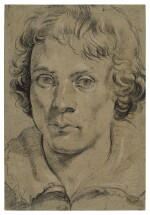
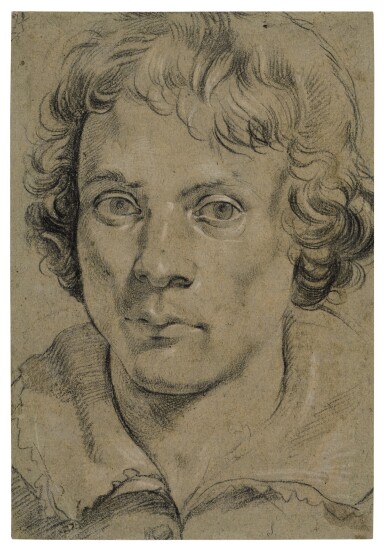
Drawn with great accuracy and strength of handling, this impressive and appealing portrait, most probably done from life, demonstrates both Bolognese and Tuscan influences, combining the Carracci’s straightforward approach to reality with a more Florentine sense of solidity. Although no directly comparable drawings by the artist are known today, close comparisons can be made with paintings by Alessandro Tiarini, who worked in both cities, and seems the most likely author of this fine drawing.
Tiarini was born in Bologna, and received his early training there, with Prospero (1512-1597) and Lavinia (1552-1614) Fontana. Then, after a brief period working with Bartolomeo Cesi (1556-1629), he moved to Florence in 1599, returning to Bologna only in 1606. While in Florence, he assisted Domenico Passignano (1559-1638) in the fresco decorations of the St. Anthony Cloister of San Marco, alongside Jacopo da Empoli (1551-1640) and Bernadino Poccetti (1548-1612).
The author of this substantial portrait, slightly over life size and with its direct gaze, seems very familiar with the innovations of the Carracci and their circle. The controlled outline of the face contrasts with the freedom of the rendering of the collar of the shirt, executed with liveliness and sensitivity. There is great technical variation within the drawing, with its lively touches of white heightening. The face is meticulously drawn with small parallel strokes that define volumes and create shadows, while the hair, on the other hand, is very freely rendered. Yet the drawing’s Carracesque naturalism is fused with a Tuscan solidity that Tiarini could have absorbed when working in Florence for Passignano.