
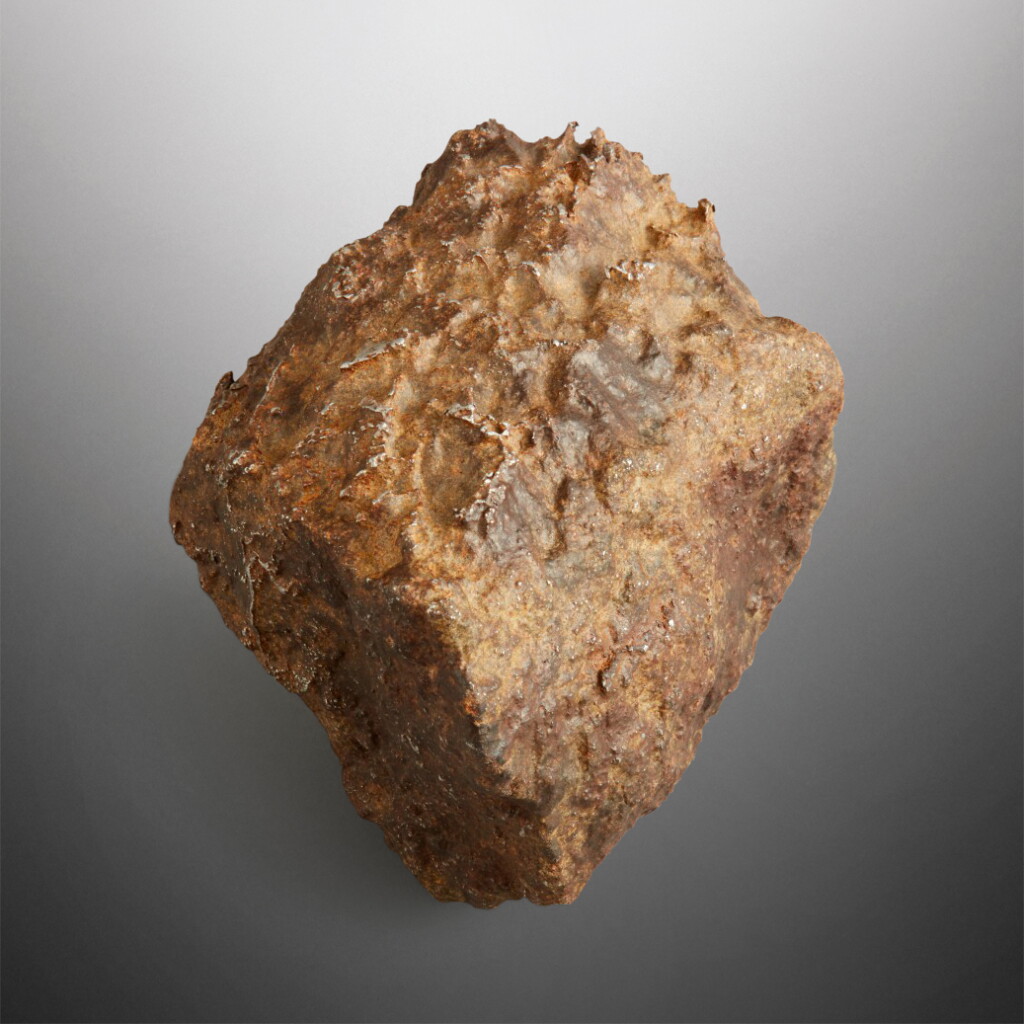
NWA 12951 | Select Example Of A Rare Winonaite
Lot Closed
December 3, 08:48 PM GMT
Estimate
40,000 - 50,000 USD
Lot Details
Description
NWA 12951 — Select Example Of A Rare Winonaite
Primitive achondrite – winonaite (metal veined)
Northwest Africa
90 x 85 x 75mm (3.5 x 3.3 by 3 in.) and 1,026 grams (2.25 lbs.)
As of November 22, 2021, there are 67,454 meteorites documented in the journal of record, the Meteoritical Bulletin — whose total weight is less than the world’s annual output of gold. Only 63 (.09%) of the nearly 68,000 are winonaites and NWA 12951 is one such example. Winonaites are named after the type specimen, Winona, which was recovered during the excavation of a Pueblo archeological site outside of Winona, Arizona. Winonaites are primitive achondrites — a phase between chondrites and achondrites with similarities to both. As a result of heating and melting they lost their chondritic texture, but not quite to the point of becoming fully melted and blended achondrites. Winoaites are believed to originate from the same parent body as IAB iron meteorites (see Canyon Diablo, lot 92) because the silicate inclusions of IAB iron meteorites are similar in composition to winonaites.
Approximately 80% of this meteorite’s surface is ablated as a result of winds to which it was exposed on Earth’s surface. Prominent metal veins separate recessed regions of silicate. The part of the stone buried during its desert residency is covered with remnants of weathered fusion crust (a thinly layered crust which forms when a meteorite penetrates Earth’s atmosphere and reaches high surficial temperatures from frictional heating). Fine grained olivine and green pyroxene are observed in places where the crust is missing. A variegated tan patina blankets the highly textured surface of metal veins coursing through the matrix. Found in 2019, this is an exemplary specimen of an exotic meteorite.
PROVENANCE:
Private collection of Albert Jambon / Space Birds
You May Also Like


