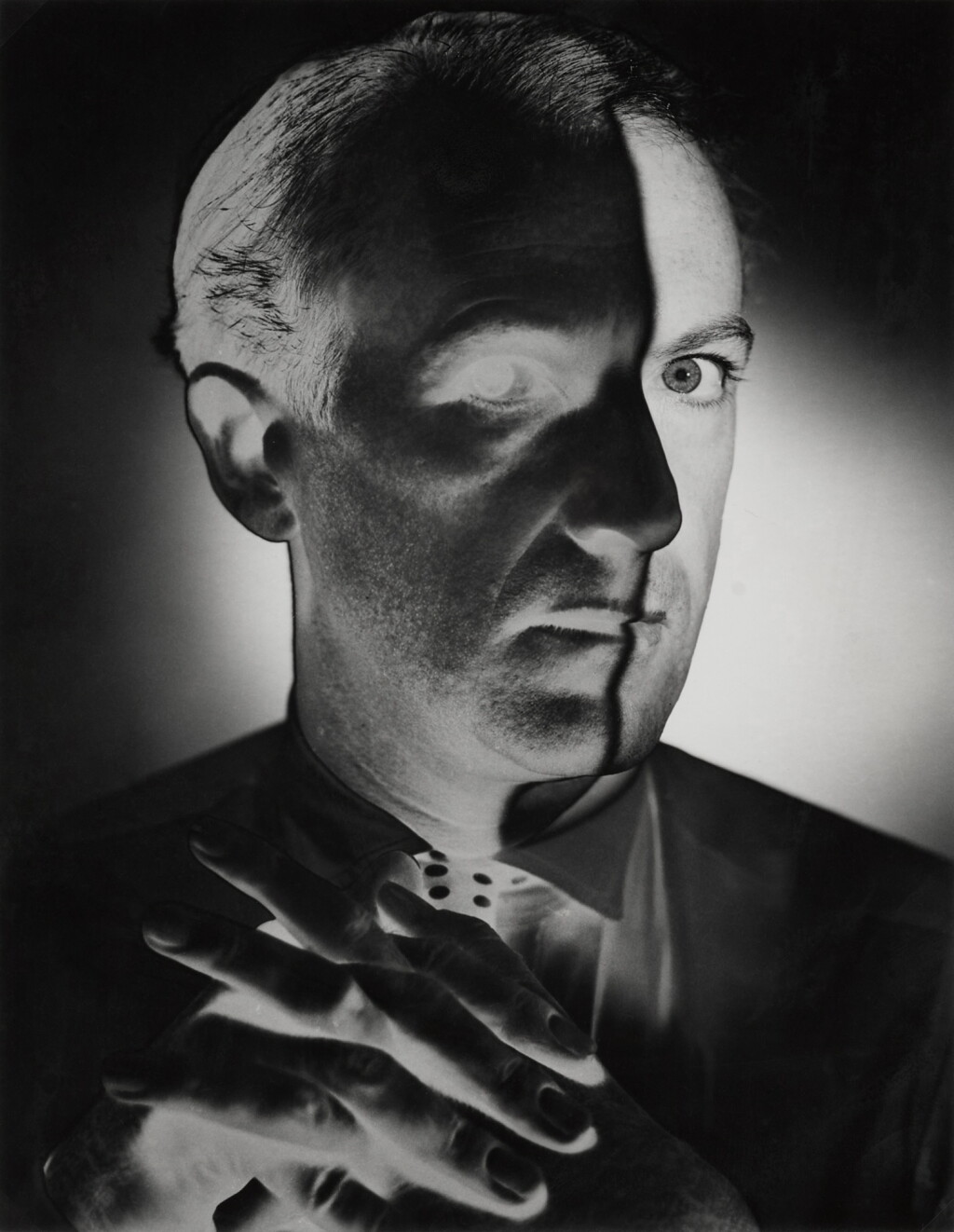
About Face: The David and Gail Mixer Collection of Photographs
Erwin Blumenfeld
Cecil Beaton, New York
Lot Closed
April 10, 02:03 PM GMT
Estimate
15,000 - 25,000 USD
Lot Details
Description
About Face: The David and Gail Mixer Collection of Photographs
Erwin Blumenfeld
1897 - 1969
Cecil Beaton
gelatin silver print, the Estate of Erwin Blumenfeld stamp, number '31' in pencil, and an indistinct annotation in ink on the reverse, framed
image: 13⅛ by 10¼ in. (33.3 by 26 cm.)
frame: 27 by 23 (68.6 by 58.4 cm.)
Executed circa 1947.
Pace/MacGill Gallery, New York
Acquired from the above in 2000 by the present owner
Van Deren Coke, Photography: A Facet of Modernism (San Francisco Museum of Modern Art, 1986), pl. 30
William A. Ewing and Marina Schinz, Blumenfeld Photographs: A Passion for Beauty (New York, 1996), pl. 7
Solarization, also known as the Sabattier effect, was 'discovered' by Man Ray (see Lot 17), whose avid curiosity to explore the fine line that separates reality to our subconscious made him one of the most prolific artists from the Surrealist circle. The Parisian avant-garde had a large influence on Erwin Blumenfeld's and he discovered Man Ray’s ground-breaking vision through the pages of the Surrealist magazine Le Minotaure.
"Perhaps to emphasize the dual personality of [Cecil] Beaton, who was both a society portraitist and a friend of many on the fringe of the Surrealist circle in London, Blumenfeld presents a part negative-part positive image." (Photography: A Facet of Modernism, p. 88)
In 1938, Blumenfeld met photographer Cecil Beaton, who, admiring his work, introduced him to Michel de Brunhoff, editor of Paris Vogue. It was through Beaton's introduction that Blumenfeld secured a contract with Vogue, and his career as a fashion photographer is born. The two photographers became life-long friends.
During the Second World War, Blumenfeld and his family fled Europe and settled in New York in 1941. Blumenfeld made the present portrait from a 10-by-8 inch negative circa 1947 when Beaton visited him in New York.
You May Also Like