James Barnor
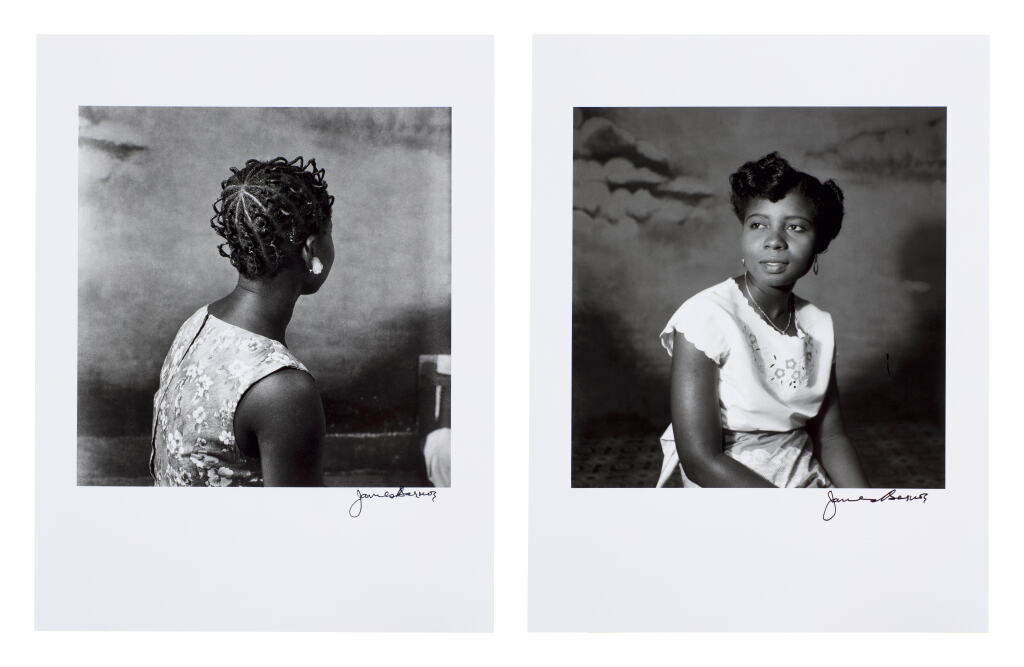
Studio Ever Young, Accra, c.1954 & Evelyn Abbew, Ever Young Studio, Accra, c.1950s
No reserve
Lot Closed
August 1, 02:21 PM GMT
Estimate
5,000 - 7,000 GBP
We may charge or debit your saved payment method subject to the terms set out in our Conditions of Business for Buyers.
Read more.Lot Details
Description
James Barnor
b. 1929
i. Studio Ever Young, Accra, c.1954
ii. Evelyn Abbew, Ever Young Studio, Accra, 1950s
i. signed (lower right); numbered 2/5 (on the verso)
ii. signed (lower right); numbered 1/5 (on the verso)
i. 35.7 by 27 cm. 13⅞ by 10⅝ in.
ii. 35 by 27 cm. 13¾ by 10⅝ in.
each: silver print
Galerie Clémentine de la Féronnière, France
Acquired from the above by the present owner
(i) Lizzie Carey-Thomas and Joseph Constable, Eds., James Barnor: Accra/London - A Retrospective, London 2021, illustration on the cover of another example
(ii) Damarice Amao, Ed., James Barnor: The Roadmaker, Paris 2021, illustration of another example
James Barnor’s Studio Ever Young, Accra, c.1954 and Evelyn Abbew, Ever Young Studio, Accra, c.1950s, are eloquent windows into a society poised between tradition and the dawn of independence. Taken at his pioneering Ever Young studio, founded in 1953 in Accra, these silver prints distil both the hope and sophistication of urban Ghana in the 1950s, a period which Barnor’s lens uniquely chronicled.
Barnor’s studio portraits are celebrated for their warmth, elegance and subtle social commentary. He succeeded in putting his sitters completely at ease, often aided by music and conversation, resulting in photographs that radiate confidence. In the figure of Evelyn Abbew and her peers, Barnor captured a burgeoning modernity, with self-assured personalities embracing new fashions and ideas in the run-up to Ghana’s independence from Britain.
What makes these portraits especially resonant is their context: Ever Young was not just any studio, but a meeting-point for a vibrant cross-section of Accra’s population, from civil servants to performers and newlyweds. Through his careful composition and empathetic approach, Barnor transformed the act of portraiture into a celebration of individual and collective identity during a time of exhilarating change.
Now regarded as a cornerstone of African photographic history, Barnor’s work was, for much of his long career, known only locally. Today, his legacy is firmly established through international exhibitions and acquisitions, with these two early prints exemplifying his enduring vision and artistry.